

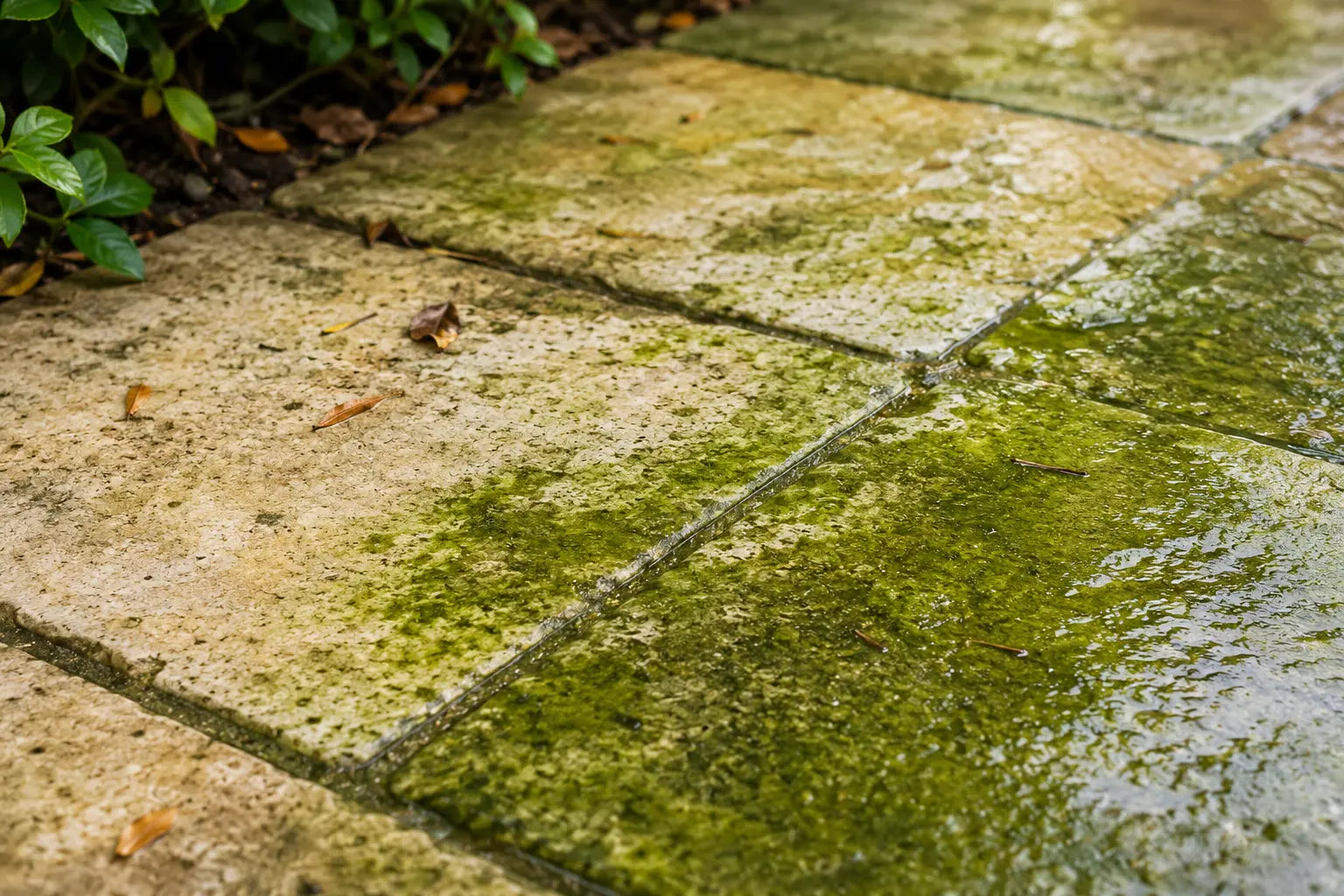
You step outside on a winter morning, coffee in hand and there it is that dull green film creeping across your sandstone path or pool surrounds. It wasn't there in summer. Now it's everywhere making the walk to the clothesline feel like an ice-skating rink.
Before you reach for the bleach or the vinegar spray bottle everyone on the internet swears by, stop. If your paving is limestone, travertine or marble, that "trusted" advice could be quietly eating away at your stone. Here's what's actually going on and how to fix it properly.
Why Winter Is Prime Time for Algae on Natural Stone
Algae aren't dirt. They are a living, photosynthesising organism, technically closer to a plant than a stain and need three things to thrive: moisture, a food source (organic dust, pollen, minerals in the stone itself) and just enough light to photosynthesise.
Do you know? Algae don't need full sun. They actually prefer filtered or indirect light which is exactly what winter delivers; the sun sits lower in the sky, days are shorter and shadows from fences, trees and the house fall across paving that got full sun all summer.
The Perfect Storm: Low Sun, High Moisture, Slow Evaporation
In summer, Melbourne, Sydney and Brisbane paving dries out within an hour or two of rain. In winter, that same puddle can sit for a day or more. Lower temperatures slow evaporation, the sun's weaker angle can't burn off moisture the way it does in January and southerly-facing or shaded areas barely see direct light at all. Add in damp joint sand and leaf litter and you've built algae a five-star hotel.
Which Natural Stone Types Are Most Prone to Algae?
This is where most cleaning guides get lazy as they treat "natural stone" as one material. It isn't and knowing the difference matters before you clean anything.
-
Sandstone Algae: Why It's the Most Vulnerable Stone - Sandstone is genuinely porous as it drinks up water rather than shedding it, which is part of why it feels so good underfoot in summer. In winter, that same porosity means it holds moisture longer than almost any other paving stone, making it the most algae-prone material in the whole natural stone family.
-
Algae on Travertine: Small Holes, Big Problem - Travertine's signature pitted texture (those little surface holes formed as the stone develops) is brilliant though it also gives algae spores somewhere to lodge and hide from surface cleaning.
-
Algae on Limestone and Marble: Handle with Care - Both are calcium carbonate-based, which means they're chemically reactive to acid including the vinegar half the internet recommends for algae. More on this below.
-
Granite and Bluestone: The Low-Maintenance Toughs - Both are dense, low-porosity stones with far less water absorption, so while they're not immune to algae, they're noticeably more resistant and easier to keep clean through winter.
The Big Mistake: Why Vinegar and Bleach Can Wreck Your Stone
Vinegar is acetic acid. Bleach, in high enough concentrations, is also alkaline enough to cause damage over repeated use. Neither is a problem with concrete or porcelain but limestone, marble and travertine are all made of calcium carbonate and acid reacts with calcium carbonate the same way it would with chalk. The result is called etching: a dull, rough, permanently marked patch where the surface has literally been dissolved.
How to Safely Remove Algae from Natural Stone? (Without Damaging It)
- Dry sweep first: Clear loose debris, leaves and dirt with a soft-bristle broom before adding any moisture as this alone removes a good portion of the food source algae needs.
- Use a pH-neutral, stone-specific cleaner: Look for products labelled safe for natural stone (not just "pavers") and check they're calcium carbonate safe if you have limestone, travertine or marble.
- Low-pressure rinse only: A wide-fan, low-pressure hose or gentle pressure washer setting lifts algae without forcing water deeper into the stone's pores or blasting out joint sand.
- Let it dry fully before resealing: Trapping moisture under a fresh seal coat only sets you up for the same problem again.
Preventing Algae on Natural Stone Before Winter Hits
- Reseal with a breathable sealer: A quality sealer designed for natural stone reduces water absorption without trapping moisture inside which is the opposite of what a cheap "wet look" coating can do.
- Fix drainage before winter hits: Standing water is the single biggest predictor of algae. A slight regrade or additional drainage point around low spots pays for itself.
- Keep joints topped up: Damp, sunken joint sand is a moisture trap and a weed magnet in one.
- Prune back overhanging growth: Even a small increase in winter sun exposure makes a measurable difference to how fast paving dries out.
Algae vs Moss vs Lichen: What's Actually Growing on Your Stone?
Algae need light to photosynthesise and deeply shaded areas often grow more moss and lichen instead. These are different organisms entirely with their own removal rules. So, if you're seeing black, crusty patches rather than green films, that's usually lichen and it needs a different approach altogether.
When to Call a Professional Stone Cleaner
If algae have been left untreated for more than a season, if you're dealing with heavily pitted travertine or if a previous cleaning attempt has already left etching or dulling on limestone or marble, it's worth getting a professional stone restoration quote before you make it worse with more DIY chemicals.
The Right Stone Makes Winter Easier Too
If you're planning a paving project and winter algae is a genuine concern for your site (shaded courtyard, south-facing path, pool surround under trees), it's worth factoring that into your stone choice from the start. Granite and bluestone are naturally lower-maintenance options for damp, shaded areas, while sandstone and travertine reward a bit more seasonal care in exchange for their warmth and character.
Not sure which stone suits your space? Stone Centre’s range spans the full spectrum from low-maintenance granite to characterful travertine. Grab a free sample and see how each one actually feels before you commit.