

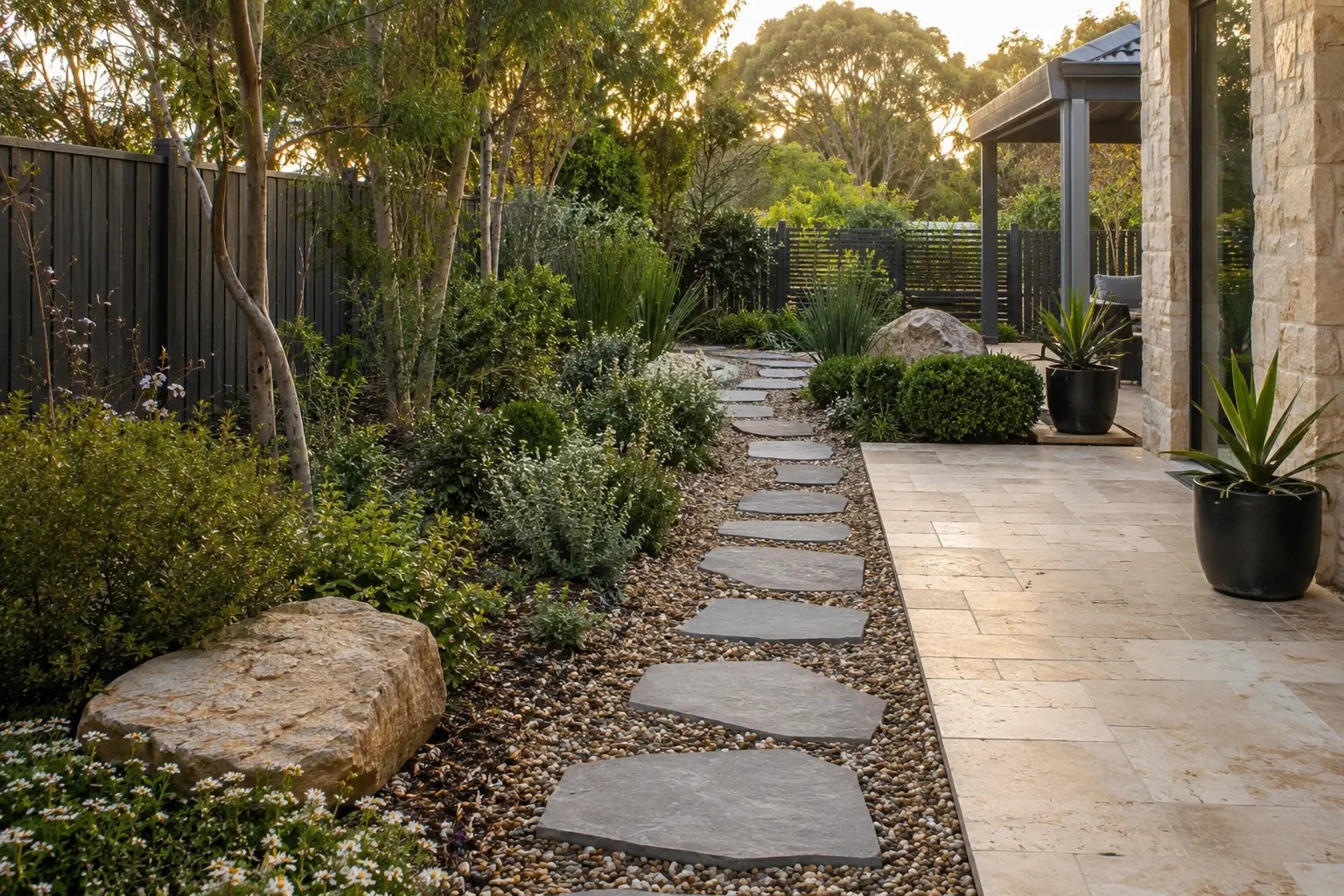
Winter's actually the smartest time to sort out your outdoor space, not the worst. Trades have more availability, plants go dormant so there's less mess to work around and the season provides ideal conditions for planning and improving the outdoor spaces.
While everyone else waits for spring and then scrambles to book a landscaper, you could have your paving, walls and fire pit ready to enjoy the second the weather warms up.
Natural stone is particularly suited to Aussie conditions. It handles temperature swings, copes with heavy winter rain in the southern states and doesn't fade or warp the way some synthetic materials do. In this guide, you'll get nine practical natural stone landscaping ideas for winter, plus the answers to the questions homeowners actually ask such as which stones is a better choice and which stones will go well together.
Creative Winter Landscaping Design Ideas
Winter is a feeling and there is nothing better than gathering around a fire pit with your favourite people. To create a comfortable setup, you need to plan everything. Here are some creative landscaping design ideas for winter.
1. Go Bold with a Crazy Paved Courtyard
Crazy paving uses irregular, broken pieces of stone fitted together like a puzzle and it's having a real moment in Australian gardens. It works brilliantly for winter projects because offcuts and remnant stone are often cheaper and readily available. But if you want the one that are well suited for outdoors then it can be expensive but worth the look and feel.
Best stones: Sandstone and bluestone crazy paving both weather well and develop a lovely, aged character over time.
Slip tip: Choose a split-face or naturally textured finish rather than a honed one; the irregular surface gives better grip when footpaths get slick with rain.
2. Stepping Stones Through Garden Beds
Laying stepping stones are one of the easiest weekend projects and they can instantly make a garden feel appealing. In winter, when garden beds are muddier underfoot, a stepping stone path stops you tracking dirt through the home.
Space them at a natural walking stride , roughly 60-65cm apart and set them slightly above the soil so water drains away rather than pooling on top.
Which stones work best: Bluestone or Granite are ideal as they can manage the foot traffic and offer pop in colour.
3. Stone Wall Cladding that Stands Out
Wall cladding is a fast way to transform a bland brick fence, retaining wall or outdoor kitchen without a full rebuild. Thin stone veneers are lightweight, quick to install and give the same visual impact as solid stone at a fraction of the cost.
Limestone and travertine cladding both bring a warm, Mediterranean feel that suits Australian homes, especially north-facing courtyards that catch winter sun.
4. A Stone Fire Pit as the Winter Focal Point
Nothing says "outdoor entertaining, even in July" quite like a fire pit. A circular bluestone or granite fire pit becomes the natural gathering spot on cold nights and both stones handle heat exposure pretty well.
5. Granite for your Entryway
Front entry steps take a beating in winter wet shoes, dropped umbrellas, kids running in from the rain. Granite is one of the hardest natural stones available, making it perfect for steps and other high-wear areas.
It's also easy maintenance, which makes it a smart pick if you want something that gives luxe feel without putting too much effort into it.
6. Stone Edging to Define Garden Beds
A simple row of stone edging keeps garden beds tidy and stops mulch washing onto paths during heavy winter downpours. Small sandstone tiles or limestone work well here and are an easy and quick choice for a DIY weekend job.
7. Create a Sun-Warmed Courtyard
Travertine has a soft, sun-baked look that makes outdoor spaces feel warmer even on a grey winter's day. It's especially popular for alfresco courtyards and patios because it stays relatively cool underfoot (light colour) in summer while still looking inviting in winter.
Sealing note: Travertine is naturally porous in nature, so it does need sealing before the wet season hits. Unsealed travertine can absorb moisture, which leads to staining and over time surface pitting.
8. Combining Stone Types for Layered Texture
The most striking gardens rarely use just one stone. Pairing a bluestone path with sandstone retaining walls and granite steps creates depth and visual interest without looking mismatched, as long as the tones sit in the same warm-to-cool family.
Design tip: Stick to two or three stone types maximum in one space any more than that can start to feel busy rather than considered.
9. Sandstone Retaining Walls for Sloped Gardens
If your property has any slope, winter rain will show you exactly where drainage problems live. Sandstone retaining walls are both functional and good-looking, holding back soil, improving drainage while adding natural look to your garden space.
Sandstone pairs particularly well with native plants; think grevilleas, kangaroo paw and grasses because the stone's warm ochre and honey tones echo the natural Australian bush palette.
| Stone | Slip Resistance (Wet) | Moss Risk | Finish options recommended | Best Use |
|---|---|---|---|---|
| Bluestone | High (textured finish) | Low-Moderate | Honed | Paths, fire pits, courtyards |
| Travertine | Moderate | Moderate | Honed and filled & honed and unfilled | Courtyards, alfresco areas |
| Limestone | Moderate | High in shaded/damp spots | Honed, flamed, sandblasted and anti-slip | Wall cladding, edging |
| Granite | High | Low | Honed and anti-slip | Steps, high-traffic areas |
| Sandstone | Moderate-High (textured) | Moderate | Honed and Sandblasted | Retaining walls, stepping stones |
Note: The information above is intended as a general guide. Always consult your architect or landscaper to select the right quality natural stone for your property's surroundings, that suits the climate and lifestyle.
Mistakes to Avoid with Winter Stone Landscaping
-
Skipping sealant: Limestone, sandstone and travertine all need sealing before wet weather sets in or else they can soak up moisture and stain. It’s better to be prepared for the season.
- Choosing polished finishes for outdoors: They look sleek in a showroom but turn into a slip hazard the moment it rains.
- Ignoring drainage: Laying stone directly onto poorly drained soil is a fast track to pooling water and eventual stone movement. Ensure to have a solid base to have a stress-free experience throughout the season.
- Mixing too many stone tones. It's tempting to grab whatever's on sale, but a scattered palette makes a garden feel unplanned.
Maintenance Tips to Keep Stone Looking Its Best
- Sweep leaves and organic debris off paving regularly as decomposing leaves are one of the biggest causes of moss build-up.
- Reapply sealant every 1-3 years on porous stones like limestone, sandstone and travertine.
- Use a stiff outdoor broom and a diluted, stone-safe cleaner rather than a high-pressure hose, which can wear down grout lines over time.
- Check drainage points before winter rain sets in to avoid water sitting on the surface.
Final Thoughts
Winter isn't a pause button for your garden; it's a head start. Whether you're after a crazy paved courtyard, a stepping stone path through the garden beds or a fire pit to make the cold nights worthwhile; natural stone offers a variety of options. Pick the right stone for the right spot, seal what needs sealing and you'll have an outdoor space ready to enjoy well before summer rolls around.
Q1. Is winter a good time to landscape with natural stone in Australia?
Ans: Yes. Cooler temperatures make it easier to work with stone and concrete, tradies are generally more available, and your garden will be ready to enjoy as soon as spring arrives.
Q2. How do I stop moss growing on stone paving?
Ans: Keep the surface free of leaf litter, ensure good drainage and avoid overly shaded, damp spots where moss thrives. Occasional cleaning with a stone-safe solution also helps.
Q3. What natural stone pairs best with native Australian plants?
Ans: Sandstone's warm, earthy tones complement native gardens particularly well, sitting naturally alongside grevilleas, banksias and ornamental grasses.