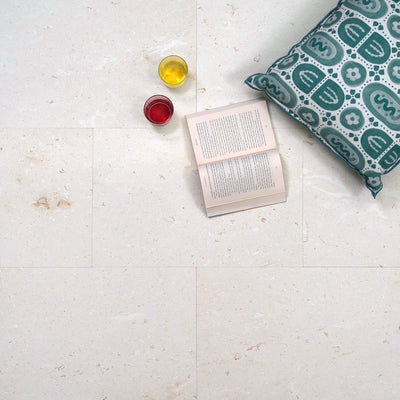
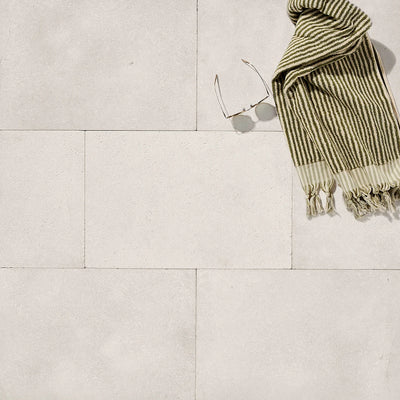
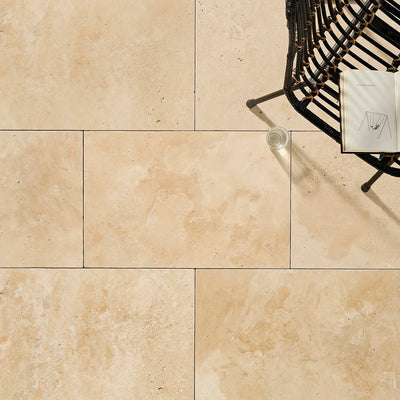
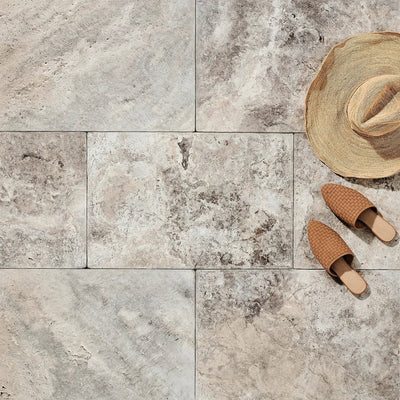



You know something that most people don't realise until they have visited multiple showrooms and become completely confused? Well, picking natural stone isn't just a limestone vs travertine vs marble vs granite decision. That's only half of the story.
The finish is the other half. And it can completely change how the exact same stone looks, feels and behaves. Think of the finish as the final styling decision for your stone. The stone itself is the raw material, but the finish is what gives it that appeal. It decides whether that material walks into your home looking sleek or rustic and sun-worn or somewhere in between.
If you're renovating or building home or just staring at stone samples feeling completely lost, this one's for you. We're covering 5 main finishes that we offer at Stone Centre:
- Honed
- Flamed
- Natural Split
- Antique
- Sandblasted
By the end, you'll know exactly which one fits your space and no more guessing required. Let’s get started.
What Is a Natural Stone Finish?
A natural stone finish is simply the treatment applied to a stone's surface after it's cut from the block. Think of it as the "final touch" that decides how the stone looks, feels and performs.
Every piece starts rough from the quarry. What happens next is honing, polishing, tumbling, flaming or just a clean saw cut that shapes everything from its shine to its slip resistance. But a stone finish can truly change the way a stone looks. For instance, if you go with honed limestone. Quiet, matte, contemporary, the kind of surface that just melts into a modern home. Now take that same limestone and give it a flamed finish instead. Suddenly it's aged, weathered, relaxed, like it's always been there. Same block of stone.
A stone finish affects:
- Surface texture
- Shine and light reflection
- Colour appearance
- Grip and slip resistance
- Maintenance requirements
- Overall design style
- Suitability for indoor and outdoor areas
The Natural Stone Finishes Explained
Understanding all the finishes from its basics will simplify your buying decision. So, let’s get clarity on each finish.
1. Honed Finish
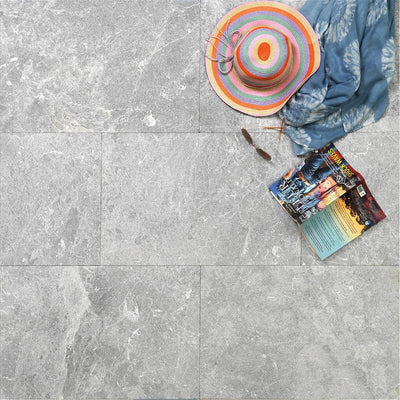
Honed finish has a smooth, matte surface with almost zero shine. It's ground flat and smooth but without the glossy finish.
What it looks like: Soft, chalky, understated. Colours look slightly muted compared to polished stone, with a velvety look instead of a reflective one.
Where it's used: Bathroom floors, kitchen floors, hallways and outdoor paving. It's a favourite across Aussie homes because it hides scratches and etching and is comparatively a better choice than polished stone and stays less slippery when wet.
2. Flamed Finish
Flamed is also known as exfoliated finish, with intense heat, then rapidly cooled. The thermal shock causes the surface crystals to pop, leaving a rough, textured finish.
What it looks like: Coarse, rough, almost like sandpaper to touch. It's a bold, tactile finish with good grip underfoot.
Where it's used: Outdoor paving, pool decks, driveways and steps. Because it's so textured, it's a go-to for anywhere slip resistance really matters.
3. Natural Split
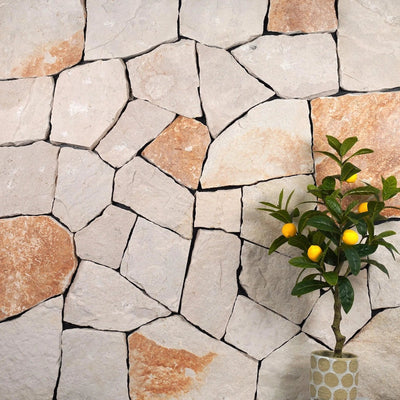
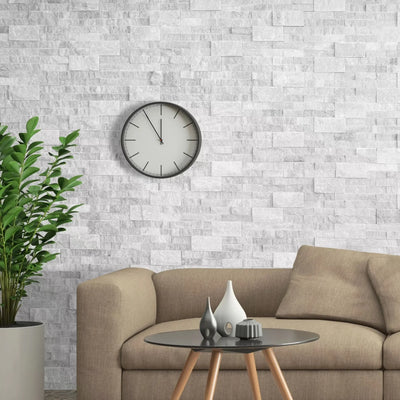
Natural split is a stone finish created by splitting the stone along its natural grain, leaving a rugged, irregular, textured surface.
What it looks like: An irregular, textured surface created by splitting the stone along its natural grain. Edges and faces are uneven, with a rugged, organic character.
Where it's used: Rustic walling, garden edging and anywhere a raw, natural stone look is the goal.
4. Antique Finish
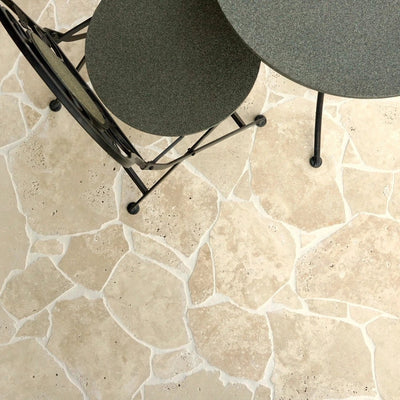
Antique finish also known as anti-slip, is treated to look like it's aged naturally over decades, even centuries. It's often achieved through mechanical brushing or a mix of tumbling and honing to soften the surface and edges.
What it looks like: Worn, timeworn, slightly uneven with a soft sheen. Edges look gently rounded rather than sharp, giving it that "been there forever" character.
Where it's used: Heritage-style homes, feature walls, fireplace surrounds and outdoor courtyards. It suits anyone chasing an old-world, European or heritage look without actually using reclaimed stone.
5. Sandblasted Finish
Sandblasted finish is created by blasting the surface with high-pressure sand or fine abrasives, wearing it down to reveal a textured, matte finish.
What it looks like: Rough, grainy and natural-looking with a soft, non-reflective surface.
Where it's used: Outdoor paving, pool surrounds, steps and driveways. It's a popular pick where slip resistance matters and it works well for that natural, understated outdoor look.
A Quick Natural Stone Finishes Comparison
This is a quick comparison to make your decision easy by comparing the key aspects of the stone:
| Finish | Look | Texture | Style | Best Suited For |
|---|---|---|---|---|
| Honed | Soft, matte, muted colour | Smooth, slightly grippy | Modern, minimalist, coastal | Kitchens, bathrooms, indoor floors |
| Flamed | Coarse, rugged, natural | Rough, highly slip-resistant | Industrial, contemporary outdoor | Driveways, pool decks, steps |
| Natural Split | Raw, unfinished, natural | Gritty, uneven | Rustic, natural, budget-friendly | Walling, edging, casual paving |
| Antique | Worn, timeworn, soft sheen | Softly textured, rounded edges | Heritage, European, old-world | Courtyards, feature walls, fireplace surrounds |
| Sandblasted | Rough, grainy, matte | Textured but not jagged | Natural, understated, contemporary outdoor | Pool surrounds, paving, steps |
Well, now that you know about the finishes. Here comes the crucial question; which stone finish is right for you? Here are few questions that you can ask yourself.
How to Choose the Right Natural Stone Finish
Picking a finish isn't just about what looks nice in a showroom. Here's a practical way to think it through.
1. Where will the stone go?
Indoor flooring and pool surrounds have completely different jobs to do. Indoors, you're chasing comfort and style underfoot. Outdoors, you need grip, weather resistance and something that won't cook in the sun or turn slippery the second it rains.
2. How much texture do you want?
Ask yourself, do you like silky smooth underfoot, a bit of gentle texture, or something visibly rough and rugged? There's no wrong answer here, but it does narrow your options fast.
If you prefer a smooth, refined look, honed finish is a better choice. If you want more texture and character, a flamed finish may suit your space better.
3. What style is your home?
Modern homes often lean honed or polished for that clean, simplified look. Coastal homes love old, weathered charm. Rustic and Mediterranean designs thrive on natural split textures, while classic homes often go for honed finishes for that timeless look.
4. How much maintenance are you comfortable with?
This is one of the crucial aspects. Honed finish can show water marks and light etching over time, especially in busy kitchens, though it's still far more forgiving than a glossy surface. Sawn and sandblasted finishes hide everyday dust and grit well, while antique and flamed finishes are the most low-maintenance due to their rough texture.
5. How will the stone interact with water and light?
Wet areas like bathrooms, pool decks and alfresco spaces need serious thought around slip resistance; this is where flamed, antique or sandblasted finishes usually win due to their textured surfaces. Meanwhile, honed stone's soft matte surface still handles light beautifully indoors, giving rooms a gentle, soft glow rather than a hard reflective bounce.
Maintenance & Sealing
This part can't be skipped; afterall maintenance and sealing play a crucial role in keeping the stone looking its best for years.
-
Honed: Porous; seal on install and reseal every 1–2 years or when required. Water marks and spills show up more on darker, saturated colours than on lighter, muted tones.
-
Flamed/Exfoliated: Textured surface traps dirt, so sweep or hose regularly. Seal every 1–2 years (or when existing sealant begins to wear); light-coloured stone hides dust and grime better than dark stone.
-
Natural Split: Raw and porous, so sealing is a must from day one. Stains are more noticeable on light stone, while dust and grit blend in better on darker tones.
-
Antique/Anti-Slip: Softened, slightly uneven surface holds sealant well; reseal every 1–2 years or when required. Its worn look already hides minor marks, so it's forgiving across most colours.
- Sandblasted: Matte, grainy texture; seal on install and top up every 1–2 years or according to the foot traffic. Water spots are less obvious than on glossy finishes, but very dark colours can still show marks due to dried water.
Note: The more textured or porous the finish, the more often it will need resealing. And no matter which finish you go with, a quality sealant applied at installation makes a massive difference to how the stone ages over the years.
Conclusion
There's no single "best" finish; it's just the right one for your space and lifestyle. Honed brings quiet elegance, flamed adds rustic charm, honed delivers glamour, flamed offers grip and sawn keeps it raw and budget-friendly. Match the finish to where it's going and how much upkeep you're willing to do and your stone will look great for years to come.
FAQs
Q1. What is the best finish for outdoor space?
Ans: There isn't one universal "best" finish; it genuinely depends on foot traffic. Also, the type of stone you are using, the look you are after and how the space will be used day to day.
Q2. Which finish is best honed or flamed?
Ans: Neither is universally better; it comes down to where the stone is going. Honed finsih offers a soft, smooth, matte look that suits indoor spaces like kitchens and bathrooms, with easy day-to-day upkeep. Flamed finish, on the other hand, has a rough, textured surface built for grip, making it a stronger choice for outdoor areas such as driveways, pool decks and steps where slip resistance matters most.
Q3. What is the most popular natural stone finish?
Ans: Honed finishes are hugely popular across Australian homes right now due to their soft, modern look and forgiving maintenance. That said, Natural split is widely preferred depending on the room and style.
Q4. Can I use the same finish for both indoor and outdoor flooring?
Ans: Generally, no, as indoor finishes like polished or honed can get slippery outdoors, especially near pools or in the rain. For outdoor paving, textured finishes like flamed or sandblasted offer far better grip and weather resistance.
Q5. Does the finish affect the cost of natural stone?
Ans: Yes, but it's not the only factor. The stone material plays a crucial role and finish adds to the pricing rather than replacing it. Labour-intensive finishes like polished or antique cost more due to the extra processing involved, while sawn stone works out cheaper since it skips that step entirely.